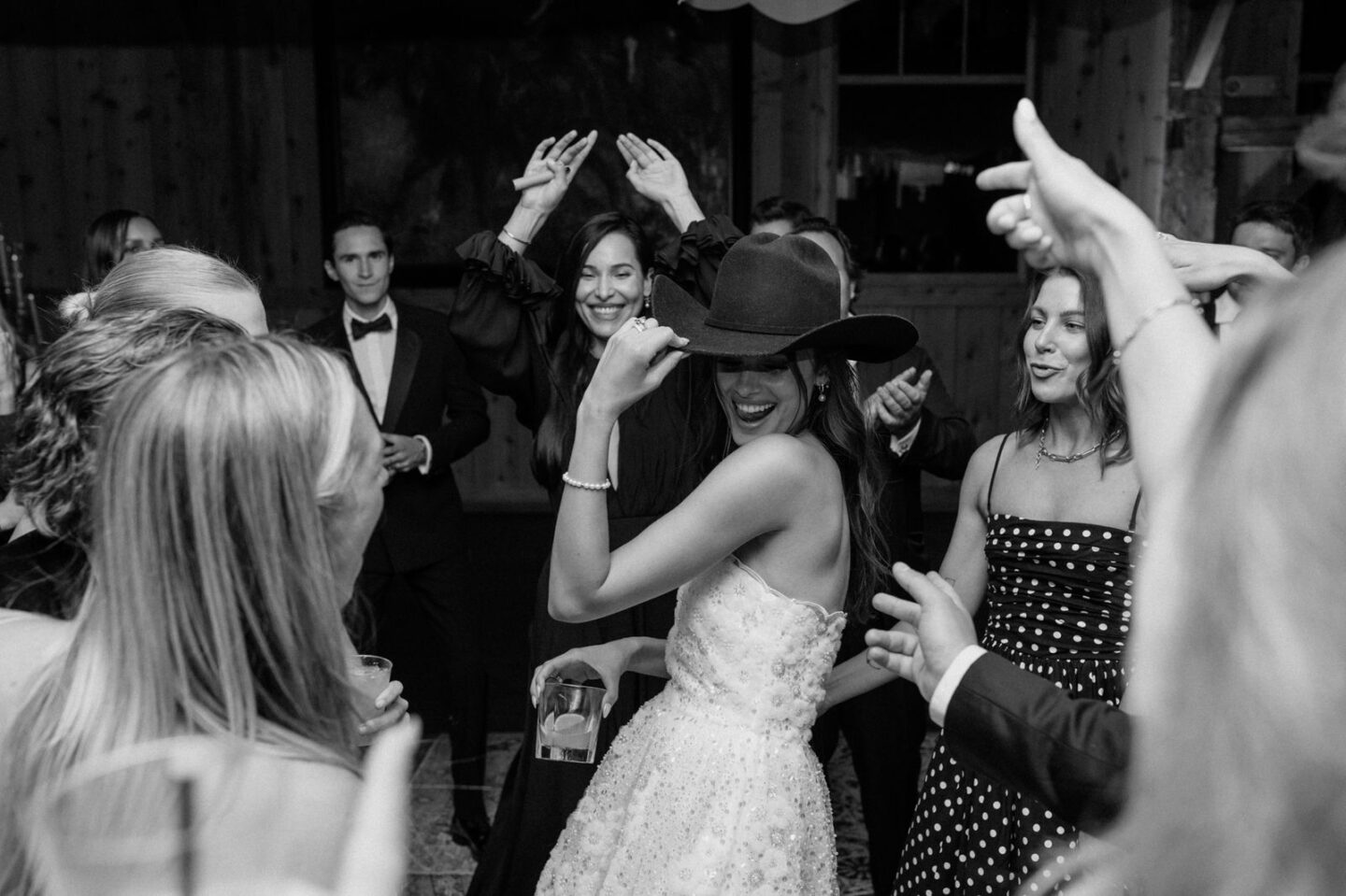
Picture your favorite wedding photo. Not the posed one in front of the venue, but the real one: the moment someone laughed through tears, or the exact second two people looked at each other and forgot the rest of the room existed. Now picture a smartphone floating in the frame. The spell breaks almost immediately.
It sounds like a small thing. But in a ceremony built entirely around presence, around witnessing something that only happens once, a sea of raised screens changes the atmosphere in ways that are hard to fully articulate and impossible to ignore. Which is why a growing number of couples are making a deliberate choice to leave devices out of the equation entirely, and why the photographers who shoot these moments are, almost unanimously, relieved when they do.
The Case for Putting the Phones Away
The most obvious argument is photographic. A professional wedding photographer is there to document the day with intention: the right light, the right angle, the right fraction of a second. But when half the room has their phone in the air, what gets captured instead is the back of a device, or a guest’s elbow, or a beautifully composed shot ruined by a glowing rectangle cutting across the frame.
“When people aren’t focused on documenting the moment themselves, something shifts,” says destination wedding photographer Elena Vasari. “They stop being spectators and start being participants. That energy is visible in every single image.”
The effect on guests is equally real. Without a screen to hide behind, people tend to drop their guard in the best possible way. They lean in. They actually watch. They respond to what’s happening in front of them rather than managing how it will look on a story that disappears in 24 hours. The result is a room full of unguarded, genuine emotion, which is exactly what great wedding photography is made of.
“I’ve shot ceremonies where guests were fully present and ceremonies where half the room was curating content in real time,” says photographer James Okafor. “The difference in the energy of those rooms, and in the final images, is not subtle.”
There’s also the couple’s experience to consider. Walking down an aisle lined with open, emotional faces is entirely different from walking toward a row of raised phones. One feels like being witnessed. The other starts to feel like a performance, and weddings already carry enough emotional pressure without adding a live audience of amateur documentarians into the mix.
How to Make It Work Without Making It Awkward
The logistics of a phone-free ceremony are simpler than most couples expect. The harder part is communicating the decision in a way that feels warm rather than controlling, because guests, however well-intentioned, will have opinions.
Start early. The save-the-date is not too soon to mention it. A brief, friendly line explaining that the ceremony will be phone-free, and why goes a long way toward framing it as a gift to guests rather than a restriction on them. Reiterate it on the invitation, on the wedding website if you have one, and with a sign at the venue entrance. The more clearly it’s communicated in advance, the less likely it is to feel like a surprise on the day.
For couples who want to go further, a basket system works well: a designated person collects phones as guests take their seats, with a clearly marked spot where devices are stored and easy to retrieve afterward. It sounds more drastic than it feels in practice. Most guests, once the ceremony begins, forget they handed anything over.
“People are often skeptical beforehand and converted immediately after,” notes wedding planner Sofia Brennan. “By the end of the ceremony, they’ll tell you it was the most present they’ve felt at a wedding in years.”
Trust your photographer. A phone-free environment only works if the couple is confident that the day is being documented fully and beautifully by someone else. That confidence comes from doing the work before the wedding: meeting multiple times, sharing references, and building a genuine rapport. A photographer you trust is one you can stop thinking about on the day, which is ultimately the goal.
Why It Matters Beyond the Photos
There’s a larger cultural current running underneath this trend. In an era when instinct has been rewired to document first and experience second, choosing to be fully present at one of life’s most significant moments is an increasingly countercultural act. A phone-free wedding ceremony is, in a quiet way, a statement that some things are worth protecting from the reflexive need to share them.
The memories guests carry home from an unplugged ceremony tend to be sharper, more embodied, more genuinely theirs. Not because they have footage to replay, but because they were actually there.
And the photographs, taken by someone whose entire job was to watch carefully and wait for the right moment, tend to be the kind that still mean something twenty years later. Not a record of an event, but proof of how it felt.
That’s harder to capture when half the room is trying to capture it too.
beauty beauty trends celebrities celebrity news christmas coffee dating fall fashion fashion fashion designers fashion trends fashion week fitness hailey bieber hairstyles hair trends halloween harry potter health holidays Instagram jewelry Justin Bieber kate middleton King Charles meghan markle mental health milan fashion week movies music netflix paris fashion week prince harry princess diana prince william relationships royal family royals skincare street style television tennis travel valentine's day wellness
